
If your medication label says “take with food,” a cup of coffee usually does not count as food. Black coffee contains fluid and bioactive compounds but provides little nutritional substance to buffer the stomach like a snack or meal. Coffee with milk, cream, or sugar may contain calories, but that still does not automatically satisfy a medicine’s food requirement.
Coffee can also change the absorption or effects of certain medicines. Unless your healthcare professional tells you otherwise, the safest general approach is to swallow medicine with plain water and eat an actual snack or meal when the instructions require food.
The short answer
No—coffee should not generally be treated as a substitute for food when taking medicine.
- If the medicine says “take with food,” have a suitable snack or meal.
- If it says “take with a meal,” do not assume coffee alone is enough.
- If it says “take on an empty stomach,” coffee may violate the fasting instructions for some medicines.
- If the directions require plain water, coffee is not an acceptable replacement.
The exact advice depends on the specific drug and formulation, so the dispensing label and patient information leaflet always take priority.
Why coffee is not the same as food
Medicines are prescribed with food for several different reasons. Coffee may not accomplish any of them reliably.
Food can protect the stomach
Some medicines can cause nausea, heartburn, or stomach irritation. A real snack or meal provides physical substance and nutrients that may reduce this discomfort. Black coffee does not provide the same buffer and may itself worsen heartburn, nausea, or stomach discomfort in some people.
When food is advised for stomach comfort, options such as toast, oatmeal, a banana, crackers with nut butter, or a normal meal are generally more appropriate than coffee alone—provided none of those foods conflicts with the medication.
Food can change medicine absorption
Some drugs are absorbed better with a meal, sometimes because calories, protein, or fat stimulate digestive processes. Other drugs are absorbed less effectively when food is present. A cup of coffee cannot be assumed to produce the same effect as the meal described in the medication instructions.
If a label specifies a full meal, a substantial meal, or a particular calorie or fat content, follow those directions precisely.
Coffee contains pharmacologically active caffeine
Caffeine is not merely a neutral ingredient. It stimulates the central nervous system and can increase alertness. Excess caffeine may contribute to nervousness, irritability, insomnia, tremor, or a rapid heartbeat. These effects can overlap with or intensify the effects of some medicines.
The U.S. Food and Drug Administration advises consumers to consider caffeine from foods, drinks, and medicines together. Coffee strength and serving size vary widely, so one “cup” is not a standardized caffeine dose.
Does coffee with milk count as food?
Adding milk, cream, sugar, or flavored syrup gives coffee more calories, but it still should not automatically be considered food for medication purposes.
There are three reasons:
- The amount may be too small. A splash of milk is not equivalent to a snack or meal.
- Dairy can interact with some medicines. Calcium in milk can reduce the absorption of certain antibiotics and other drugs.
- Coffee itself may still affect absorption. Adding milk does not remove caffeine or other coffee compounds.
If you need to take medicine with food, choose an actual compatible snack or meal and use water to swallow the dose.
Does coffee break an empty stomach requirement?
It may. “On an empty stomach” commonly means taking a medicine with water a certain time before or after eating, but the precise fasting interval differs between medicines. Coffee should not be assumed to be allowed simply because it contains few calories.
For medicines with strict empty-stomach instructions, coffee can reduce absorption or interfere with correct administration. If the leaflet says “with plain water only,” that means coffee, tea, milk, juice, mineral water, and other drinks should be avoided during the specified window.
Medicines for which coffee deserves special attention
Levothyroxine
Levothyroxine is generally taken once daily on an empty stomach, commonly 30 to 60 minutes before breakfast, according to MedlinePlus. Coffee taken too close to the dose may interfere with consistent absorption.
Take levothyroxine exactly as directed with water and keep the timing consistent. Calcium, iron, certain foods, supplements, and other medicines may also require separation. Ask a pharmacist about your specific formulation and schedule rather than changing it yourself.
Alendronate and similar osteoporosis medicines
Alendronate has very strict administration instructions. MedlinePlus states that it should be taken after getting out of bed, before eating or drinking anything, with a full glass of plain water. It should never be swallowed with coffee, tea, juice, milk, mineral water, sparkling water, or another beverage.
Patients must also remain upright and wait for the instructed period before eating, drinking, or taking other medicines. Incorrect use can reduce absorption and may injure the esophagus.
Risedronate products can also have specific food-and-drink instructions, although details can differ by formulation. Follow the exact directions supplied with the product.
Some antibiotics
Antibiotics do not share one universal food rule. According to the NHS, some must be taken with food, while others should be taken on an empty stomach. Dairy products may interfere with certain antibiotics, and caffeine-related effects can be more noticeable with some drugs.
Do not use “all antibiotics” rules. Check the name and formulation on your own prescription.
Stimulant medicines and caffeine-containing products
Combining coffee with medicines that already have stimulating effects may increase jitteriness, anxiety, difficulty sleeping, palpitations, or blood-pressure changes in susceptible people. Caffeine can also be present in headache remedies, cold products, energy drinks, pre-workout products, tea, cola, and chocolate.
Review the active ingredients on nonprescription products so that you do not unknowingly combine several caffeine sources.
Medicines affected by stomach irritation or reflux
Coffee may worsen reflux, nausea, or stomach discomfort in some individuals. If a medicine is already irritating your stomach, coffee is not necessarily a helpful “buffer,” even if you usually tolerate it. Speak with a pharmacist if nausea persists instead of repeatedly changing the dose timing.
What should you eat when medicine must be taken with food?
If the medicine does not specify a full or special meal, a practical snack might include:
- Toast with nut butter
- A banana with a handful of nuts
- A small bowl of oatmeal
- Crackers with a compatible protein source
- Yogurt with fruit, if dairy does not interact with the medicine
- A sandwich or normal meal
The ideal choice depends on the drug. For example, dairy, high-fiber foods, mineral-fortified products, or high-fat meals may be unsuitable with particular medicines.
Is water always the best drink for medicine?
For most tablets and capsules, plain water is the safest default, unless the label gives different instructions. Water helps the medicine pass through the esophagus and does not contain caffeine, calcium, fruit compounds, alcohol, or large quantities of sugar.
Take enough water to swallow the medicine comfortably. Some drugs have an exact water-volume or posture requirement, so follow their instructions rather than applying a general rule.
Avoid substituting the following without checking:
- Coffee or tea
- Milk
- Grapefruit or other fruit juice
- Energy drinks
- Alcohol
- Mineral water when plain water is specifically required
What if you already took medicine with coffee?
Do not panic, and do not take another dose automatically. Repeating a dose may cause an overdose.
Instead:
- Check the patient information leaflet.
- Note the medicine name, dose, time taken, and amount of coffee.
- Contact a pharmacist if the medicine has strict fasting instructions, if you are unsure, or if it treats a serious condition.
- Seek urgent medical help if you develop severe symptoms such as difficulty breathing, fainting, chest pain, a very fast or irregular heartbeat, confusion, or signs of a serious allergic reaction.
For many medicines, one accidental dose with coffee will not cause an emergency, but the correct response depends entirely on the drug.
A simple guide
| Medication instruction | Does coffee count? | Safer approach |
|---|---|---|
| Take with food | Usually no | Eat a compatible snack or meal and use water |
| Take with a meal | No | Take it with the required meal |
| Take on an empty stomach | Do not assume coffee is allowed | Use plain water and follow the fasting interval |
| Take with plain water only | No | Use only plain water |
| May be taken with or without food | Coffee may still interact | Check drink and caffeine guidance for that drug |
Frequently asked questions
Does black coffee count as food with medicine?
No. Black coffee provides very few calories and should not generally replace the snack or meal required by a “take with food” instruction.
Does coffee with milk count as food?
Not reliably. A small amount of milk may be insufficient, and calcium can interact with certain medicines. Have a suitable snack or meal instead.
Can I swallow tablets with coffee?
Unless the medication instructions explicitly allow it, use plain water. Coffee can affect some medicines and is prohibited with drugs such as alendronate.
How long should I wait between medicine and coffee?
There is no universal waiting period. Some medicines permit coffee, while others require a specific interval. Levothyroxine is commonly taken 30 to 60 minutes before breakfast, but other drugs use different rules. Follow the leaflet or ask a pharmacist.
Does decaffeinated coffee count as food?
Decaffeinated coffee still does not replace a meal. It contains less caffeine but retains other coffee compounds, and it is not plain water. Strict medication instructions may therefore still exclude it.
Can coffee protect my stomach from medicine?
Coffee should not be relied on for stomach protection. In some people it can worsen nausea, heartburn, or irritation. Choose an appropriate food if the medicine requires it.
The bottom line
Coffee generally does not count as food when taking medicine, whether it is black or contains a small amount of milk. It may fail to protect the stomach, cannot replace a required meal, and can alter the absorption or effects of certain drugs. It may also conflict with strict empty-stomach instructions.
Use plain water to swallow medicines unless instructed otherwise. When a label says “take with food,” eat a compatible snack or meal. For medicine-specific questions—particularly about levothyroxine, osteoporosis treatments, antibiotics, or stimulant drugs—check the patient leaflet or ask a pharmacist.
Medical disclaimer: This article provides general information and does not replace the instructions supplied with your medicine or advice from a qualified healthcare professional. Do not skip, repeat, or change a prescribed dose without appropriate guidance.
Sources
- MedlinePlus. Levothyroxine Drug Information.
- MedlinePlus. Alendronate Drug Information.
- MedlinePlus. Risedronate Drug Information.
- NHS. Antibiotics: Interactions.
- U.S. Food and Drug Administration. Drug Interactions: What You Should Know.
Related Posts

Can Antibiotics Make You Tired?
Yes, some antibiotics can make some people feel tired, weak,…
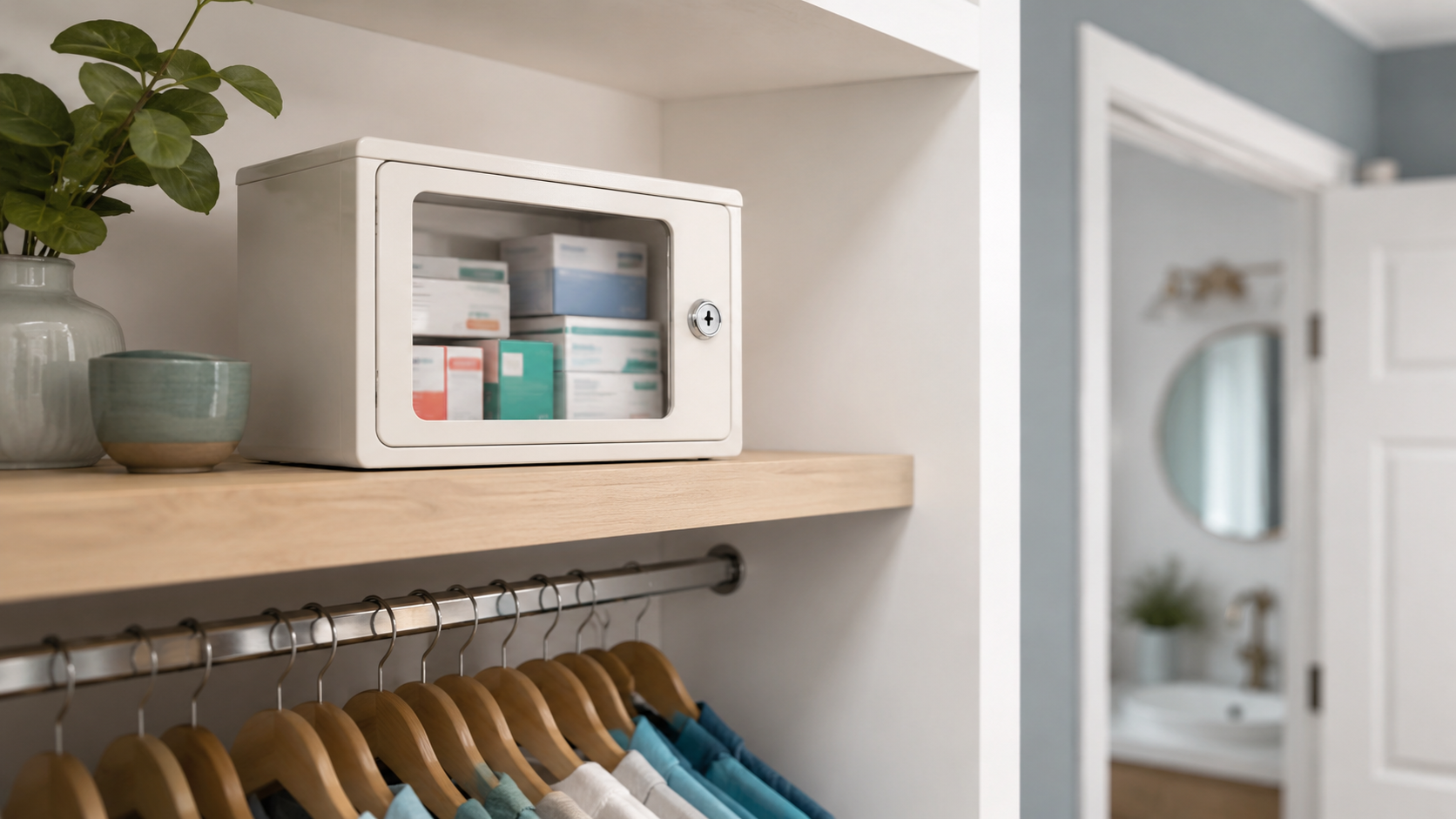
The Bathroom Cabinet Is the Wrong Place: A Safer Way to Store Medicines at Home
The Bathroom Cabinet Is the Wrong Place: A Safer Way…

Before a New Prescription: Build a Medication List That Can Reveal Hidden Interactions
Before a New Prescription: Build a Medication List That Can…